Freshwater Conservation Through Community and Curiosity

Stroud Water Research

Creative Direction
Illustration
Secondary Marks
Nature-inspired illustration suite designed to spark conversations about healthy streams, biodiversity, and the importance of riparian ecosystems.

Created for Water Week and future conservation initiatives, this merch collection translated scientific research and environmental education into approachable, wearable artwork rooted in the landscapes and waterways of Pennsylvania.

Stroud Water Research Center partnered with Freehouse to create a merchandise illustration suite celebrating freshwater ecosystems and biodiversity. Designed for apparel, stickers, and educational outreach, the project balanced scientific accuracy with playful, vintage-inspired visuals to help encourage conservation conversations in a way that felt approachable, engaging, and community-driven.

Stroud Water Research Center focuses on freshwater research, restoration, and education, but this project wasn’t about creating something overly academic or advocacy-driven. The goal was to develop artwork that could naturally spark conversations about healthy streams, riparian buffers, and biodiversity while still feeling fun enough for supporters, educators, employees, and local communities to genuinely want to wear.

The project became part of Stroud’s evolving art program, where they collaborate with different artists and designers around major conservation events like Water Week and Earth Day. The illustration suite needed to support both education and awareness while still aligning with the organization’s research-focused credibility.

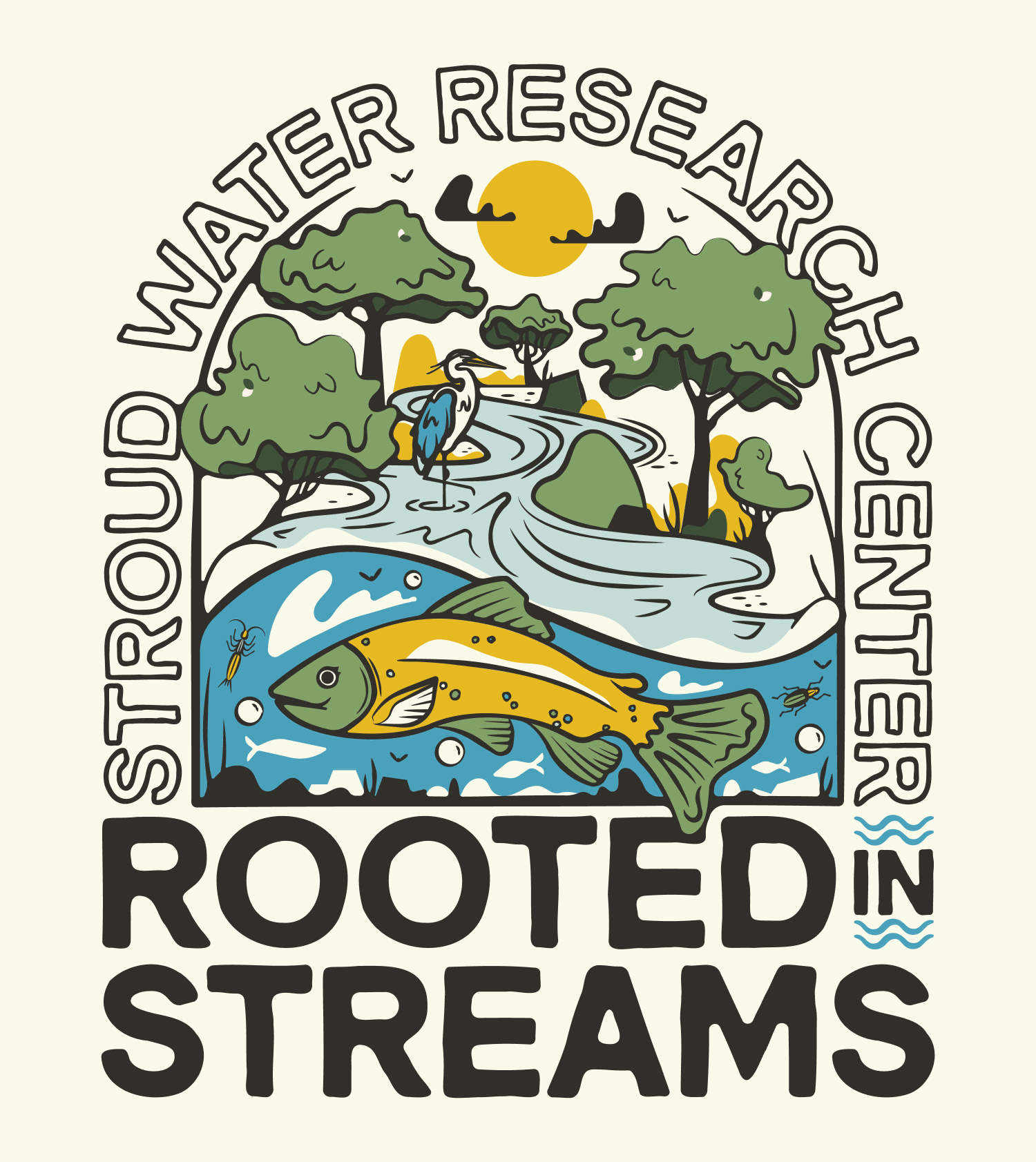
The visual direction centered around a vibrant, thriving stream ecosystem inspired by local Pennsylvania waterways. A native trout became the focal point of the primary illustration, surrounded by environmental elements like birds, aquatic insects, foliage, and flowing stream textures that reinforced the interconnectedness of healthy freshwater systems.

During discovery, we explored ways to communicate ecological concepts visually without making the artwork feel dense or overly instructional. The final direction leaned into vintage-inspired outdoor graphics and tactile textures, creating something that felt educational through observation rather than explanation.

Typography used a thick, hand-drawn sans serif style that complemented the organic illustrations and gave the system a more approachable, human feel.
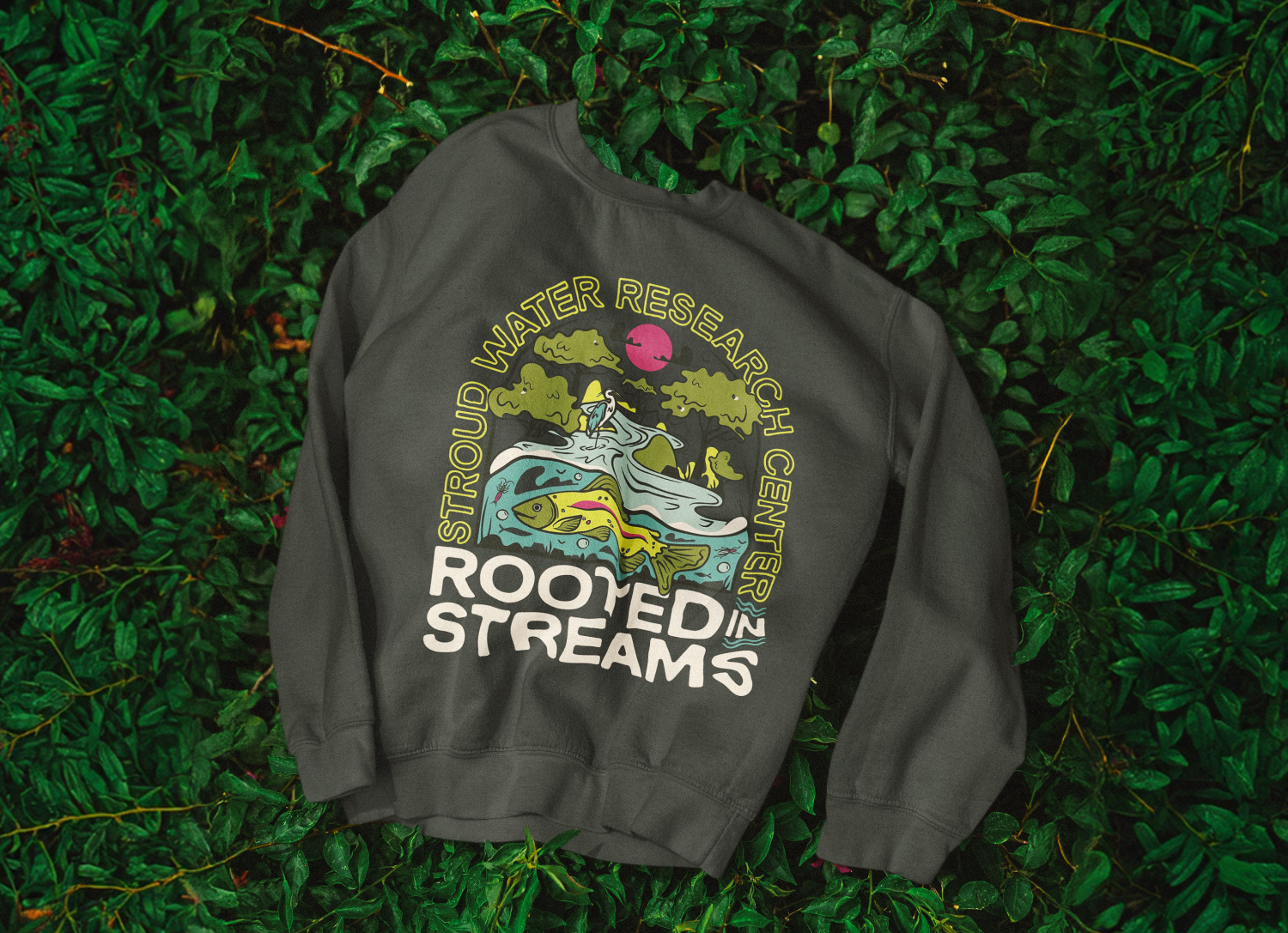
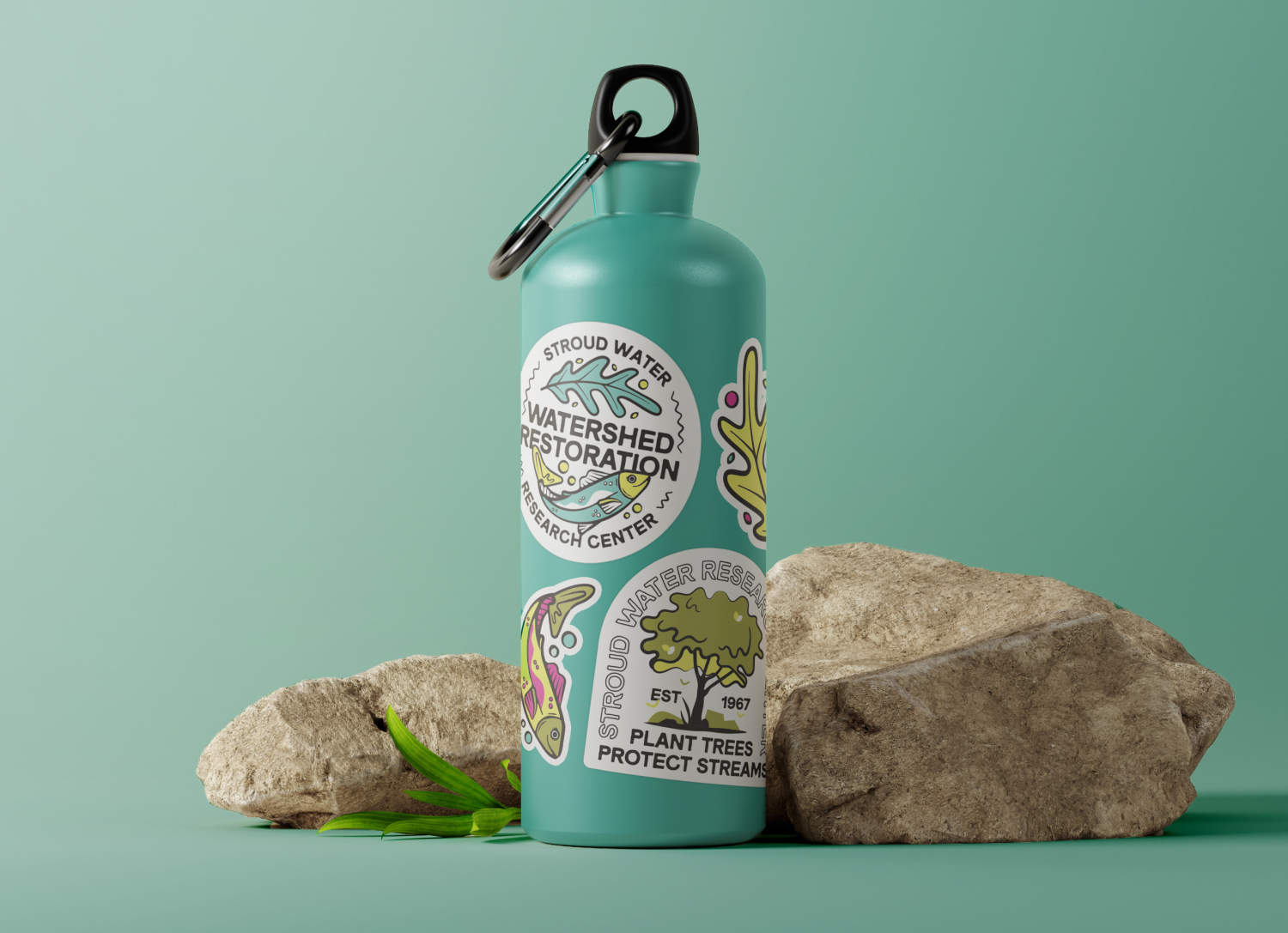
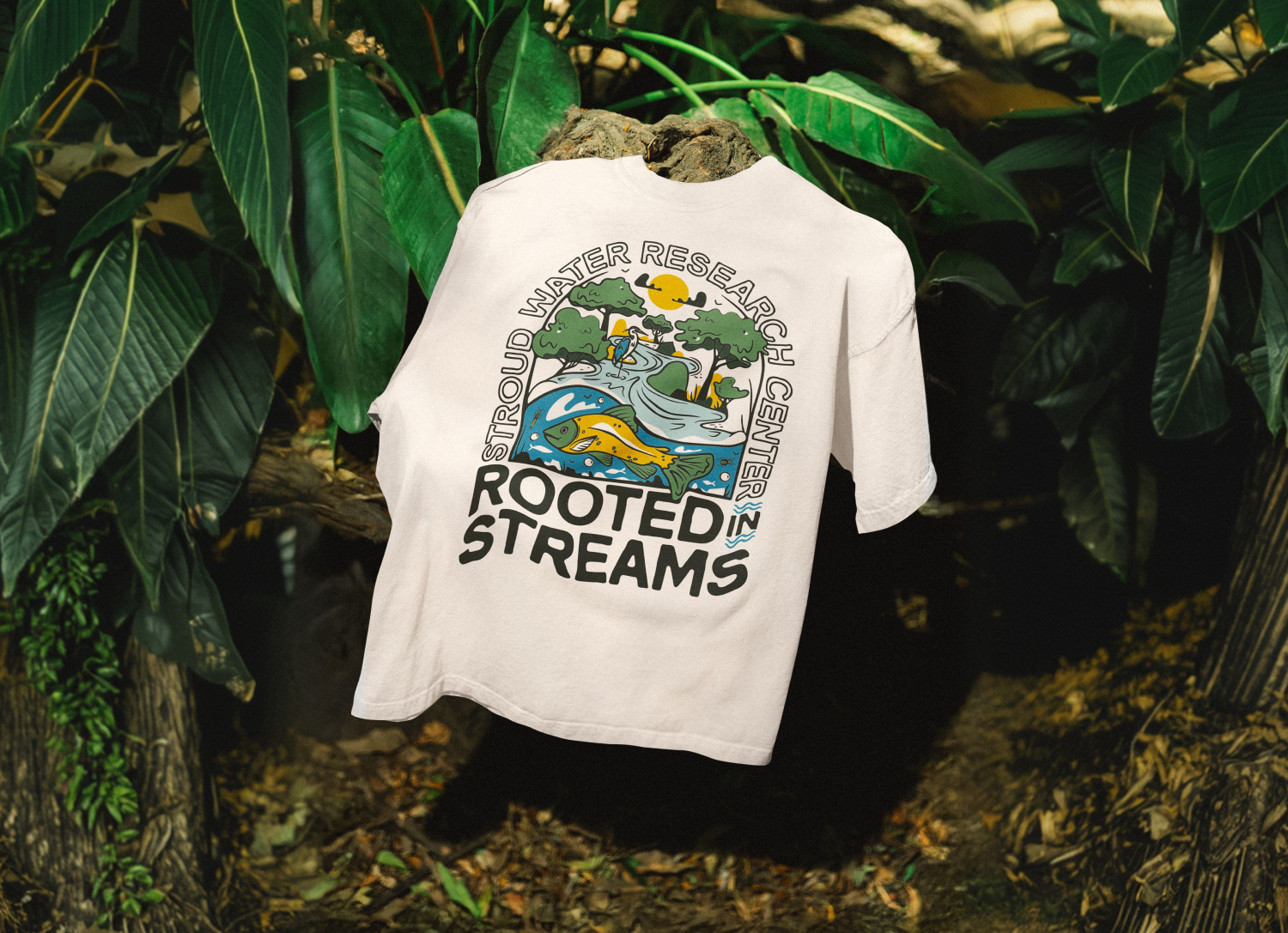
The artwork was intentionally designed to work across multiple applications, including t-shirts, stickers, and secondary merchandise for educational events and community outreach. Limited color palettes played a major role in the process, helping ensure the artwork could be screenprinted locally while remaining affordable and sustainable for production.

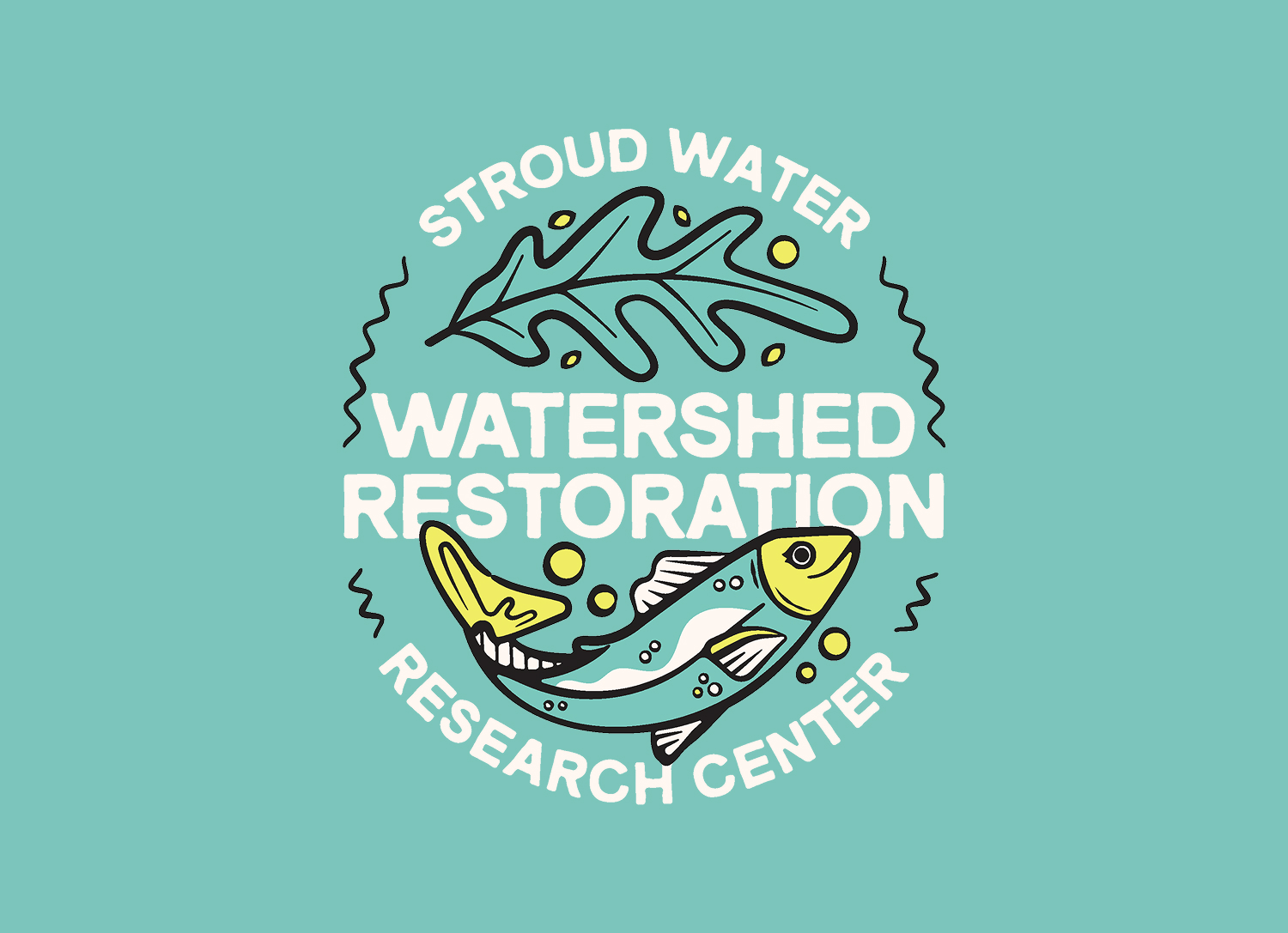
A set of secondary marks was also developed to support smaller applications like stickers and front-pocket shirt graphics. One of the standout elements of the system became a circular secondary mark featuring simplified trout and leaf illustrations that distilled the larger concept into a clean, recognizable icon.

The collaborative nature of the project also helped refine the artwork for production realities, balancing vibrant color exploration with the technical limitations of local screenprinting.

One of the most rewarding aspects of this project was finding ways to communicate conservation through personality and storytelling rather than statistics alone. The artwork created opportunities for conversation — encouraging people to ask questions about freshwater ecosystems, stream health, and restoration efforts simply because they were drawn to the design itself.

The project reinforced how impactful illustration can be within environmental education spaces when it’s rooted in accessibility, community connection, and visual storytelling. By combining scientific themes with playful outdoor-inspired design, the final illustration suite helped Stroud Water Research Center create a stronger emotional connection between people and the waterways they’re working to protect.